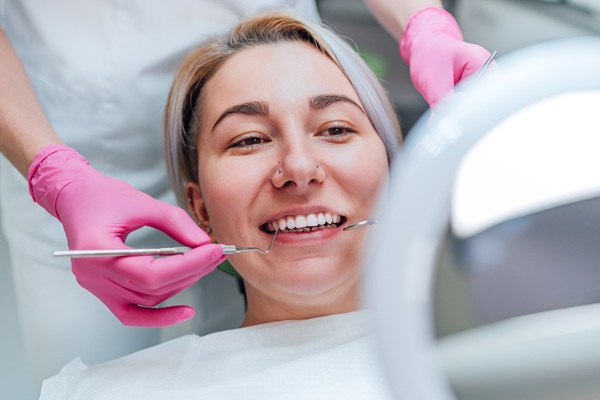
 Broken or missing teeth can weaken a patient's bite force. Fortunately, a restorative dentist can repair these teeth and, in turn, improve bite force and chewing function. The goal is to help patients enjoy the benefits of a fully functional smile.
Understanding restorative dentistry
If left in disrepair, a damaged or decayed tooth can lead to larger issues—such as tooth pain and gum disease. Restorative dentistry improves the overall function of the smile by restoring any decayed or damaged teeth and replacing missing ones. This improvement is not limited to chewing function; it also extends to improving the ability to speak and socialize. Further, practicing proper oral hygiene after a restorative treatment assists patients in achieving good long-term oral health.
Restorative treatments that improve chewing function
A restorative dentist may recommend several treatments to restore the smile and improve chewing function. The most common are dental crowns, implants, bridges, and dentures. Explore these restorative treatments below.
Dental crowns
Dental crowns restrengthen teeth that have sustained severe structural damage. Without crowns, these teeth would not only have insufficient chewing force but also would be vulnerable to sustaining further damage. Crown placement restores chewing function and saves the structural integrity of each tooth.
To place a crown, a restorative dentist will first remove any decay. If the decay has reached the tooth's center (pulp chamber), they will remove the infected pulp tissue in a root canal. Once the cleaned-out areas have been sealed with a dental material known as gutta-percha, they will create a custom dental crown that fits like a cap on the salvaged tooth. A root canal will likely precede crown placement over a severely cracked or chipped tooth as well.
Dental bridges
Dental bridges are restorative treatments that typically use crowns to support a false tooth. They can replace a single tooth and restore chewing function to that area of the mouth. Even a singular missing tooth can make it harder to bite off and chew food. In addition, it can negatively impact a patient's speech.
Dental implants
Dental implants restore chewing ability by replacing anywhere from a single missing tooth to a full arch of missing teeth. A dentist installs implants directly into the jawbone, where they become part of this natural structure. The implants are tooth root replacements, not artificial teeth themselves. Therefore, the dentist places crowns or a full-arch prosthesis on top of the implants. The result is a restoration that looks, works, and feels like real teeth.
Dentures
Dentures restore chewing ability without the need for surgery. They sit on top of the gum line, usually held in place with dental adhesive. A restorative dentist may recommend partial dentures for areas of the mouth that are missing several teeth or a full set of dentures if the patient has lost all of their teeth.
Strengthen your bite
Damaged and lost teeth render a smile less functional. However, there is a way to restore functionality and chewing ability. Our team at Lilburn Family Dentistry can help. Call today to schedule an appointment with a restorative dentist.
Request an appointment or call Lilburn Family Dentistry at 770-800-0178 for an appointment in our Lilburn office.
Recent Posts
Restorative dentists try to repair a tooth to save it before considering replacement options. Damage and decay can jeopardize a tooth and affect how the smile looks and functions. However, a restorative dentist can restore a tooth's form and function.A restorative dentist is any dentist who fixes or replaces teeth. This differs from cosmetic dentistry…
A restorative dentist is the go-to dental professional for repairing damaged teeth. While this specialist undergoes general dentistry training to learn how to provide routine care for the teeth, they specialize in repairing damaged teeth via treatments like dental fillings. In fact, dental fillings can go a long way in restoring damaged teeth. Keep reading…
When most people think of cavity treatment, they think of fillings. However, a restorative dentist may recommend inlays or onlays for more severe cases of tooth decay. These restorative treatments come in various materials, some of which blend easily with the rest of the teeth. They can, therefore, restore not only the function but also…